IANS | 30 May, 2026
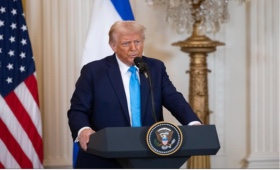
US President Donald Trump ended a two-hour Situation Room meeting on a proposed Iran agreement without announcing a decision, media reports said.
Trump had earlier said he would make a "final determination" on a proposal aimed at extending a ceasefire with Iran, reopening the Strait of Hormuz and launching negotiations over Tehran's nuclear programme.
However, after the meeting concluded, the White House offered no indication that a final decision had been reached.
CNN reported that a White House official said only that the meeting had lasted about two hours and reiterated the administration's position that Iran must never possess a nuclear weapon.
According to The Washington Post, the proposed memorandum of understanding would extend the current ceasefire for 60 days while Washington and Tehran negotiate details of a broader agreement, including the future of Iran's enriched uranium stockpile.
Before the meeting, Trump outlined conditions he said Iran would need to meet, including reopening the Strait of Hormuz, removing mines from the waterway, agreeing never to develop a nuclear weapon and allowing the United States to remove or destroy highly enriched uranium.
Iran signalled that negotiations remain incomplete.
CNN reported that Iranian Foreign Ministry spokesman Esmaeil Baghaei said contacts between Tehran and Washington were continuing but that a memorandum of understanding had not yet been finalised.
The New York Times separately reported that Iranian officials continue to object to several U.S. demands and that internal opposition from hard-line factions in Tehran remains a hurdle to any agreement.
Despite the lack of a final announcement, officials on both sides appeared to suggest that negotiations were continuing.
The Washington Post reported that Iranian negotiators are seeking the release of frozen assets and relief from economic restrictions, while US officials continue to push for measures addressing Iran's nuclear activities and regional security concerns.
According to The New York Times, administration officials believe the two sides are close to an agreement, although several issues remain unresolved, including the possible unfreezing of Iranian funds.
The Strait of Hormuz remains central to the negotiations. Roughly one-fifth of the world's oil supply passes through the strategic waterway connecting the Persian Gulf to global markets.
CNN reported that Iran's Revolutionary Guard navy said it fired warning shots at four vessels near the strait on Friday, claiming they were attempting to transit the waterway without prior authorisation.
The economic stakes remain high.
According to CNN, the heads of the International Energy Agency, International Monetary Fund, World Bank Group and World Trade Organization warned that prolonged disruption to shipping through the Strait of Hormuz could increase risks to fuel security and broader economic stability.
Financial markets responded positively to signs that diplomacy remained active. The New York Times reported that oil prices fell and US stocks rose on hopes that negotiations could eventually restore normal shipping through the waterway.
The New York Times and CNN also reported that Treasury Secretary Scott Bessent said the United States had seized approximately $1 billion in Iranian cryptocurrency assets as part of its pressure campaign against Tehran.
The negotiations follow months of conflict involving the United States, Israel and Iran that have raised fears of a wider regional confrontation and disrupted global energy markets.