The India-UK Comprehensive Economic and Trade Agreement (CETA) came into force on July 15, a year after it was signed following three years of negotiations. With all the geopolitical tensions going on, this agreement comes as a silver lining for our small businesses. Under this agreement the UK is now offering zero-duty access to close to 99% of Indian exports, across sectors from leather and textiles to marine products, engineering goods and gems and jewellery.
In my three decades in international trade and online business, I have seen many agreements signed with much fanfare. We all get buoyed by the zero tariffs headlines, but we need to give it time and see whether this actually changes anything on ground for our SMEs.
But this time it feels different because CETA isn't just about goods. It runs to 30 chapters, with provisions on digital trade, government procurement and SMEs specifically, which was never seen in earlier agreements. These chapters matter as much to a small exporter selling through an online platform as the tariff cuts does.
There is no doubt that CETA offers a huge opportunity for labour-intensive sectors like textiles, leather and footwear, gems and jewellery, marine products, where we have the manufacturing strength and the zero duty directly translates into better margins.
But at the same time, we need to understand that a zero-duty tariff line is not the same as zero-duty market access.
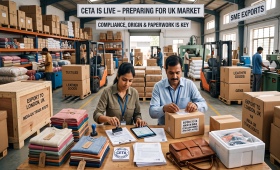
To actually claim the benefit, an exporter needs to certify rules of origin, get the paperwork right, and prove the goods genuinely originated in India rather than passing through on minimal processing. There is a lot of compliance needed to avail of complete benefits even when the tariff line reads as 0%.
So my honest advice to businesses is that they should go through the agreement, find out sector by sector and product-wise details, the specific rules of origin requirement, get their documentation and certification process sorted now, and treat the digital trade provisions as seriously as the tariff cuts.
The businesses that move first on the paperwork will capture this opportunity. The ones that wait for it to get easier will find that the head start already went to someone else.
CETA is India's most ambitious FTA yet. Whether it becomes an SME story or just a large-exporter story depends on what happens over the next few months.