IANS | 12 Aug, 2026
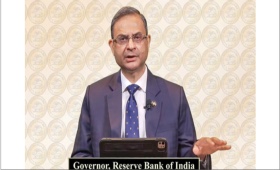
BRICS nations are exploring potential linkages between their fast‑payment systems and central bank digital currencies (CBDCs), Reserve Bank of India Governor Sanjay Malhotra has said, as New Delhi prepares to host the 2026 summit of the grouping in September.
The BRICS organisation includes Brazil, Russia, India, China and South Africa, among others.
“Cross‑border payments is an area of interest for all of us, including the BRICS, because we feel there is a lot of scope for reducing cost,” Malhotra told the annual FIBAC conference in Mumbai, according to multiple reports.
Malhotra said cross-border payments are of special interest for the BRICS grouping, as there is significant scope to lower transaction costs and improve the speed of retail payments.
The governor said "various methods, various options are on the table, but it is still at the discussion stage, including CBDC and linkages of fast payment systems."
The RBI governor added that the central bank continues its efforts to internationalise the rupee and expand the use of local currencies in trade and payments.
India currently has bilateral local‑currency arrangements with Indonesia, the Maldives, Mauritius and the UAE, Malhotra said, adding that steps to raise volumes settled in local currencies must be taken.
Malhotra also urged Indian banks to treat artificial intelligence as a capability to be harnessed rather than only a risk to be contained, according to reports.
"Indian banks cannot afford to sit on the sidelines and watch," he said, suggesting lenders to inventory all AI models in use and establish board-approved AI governance policies.
Despite geopolitical risks, including the West Asia conflict, posing risks to India's growth in the short term, measures taken by policymakers could strengthen the economy over the longer term, the governor said.
Such steps include diversification of energy and fertiliser supplies, reduction of energy intensity, ethanol blending, electric vehicles adoption, free trade agreements, etc.
India's banking system is poised to deal with geopolitical challenges due to strong capital buffers, lower bad assets and healthy profitability, he added.