IANS | 07 Feb, 2026
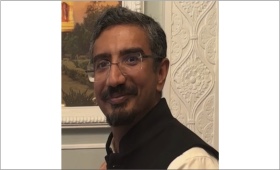
The interim India-United States trade agreement marks a significant easing of bilateral trade frictions and could help reset a relationship that had come under strain in recent months, Dhruva Jaishankar, executive director of Observer Research Foundation America, said in an interview, pointing to tariff relief, clearer trade roadmaps, and renewed political engagement.
Jaishankar said one of the first tangible steps was the removal of a tariff linked to India’s imports of Russian oil.
“We have an executive order that has been passed by the White House… related to tariffs on India for its import of Russian oil… from 25 per cent it has been eliminated,” Jaishankar told IANS in an interview.
He said the joint statement accompanying the deal provided clarity on the structure of the interim arrangement, including tariff levels.
“Most Indian imports will be subject to an 18 per cent tariff, but several of them actually will be lower,” Jaishankar said, adding that the agreement remains interim in nature, with scope for a fuller bilateral trade agreement that could further reduce tariffs.
Among the “positive surprises” he described for India was progress on so-called Section 232 national security tariffs. These had the potential to affect about 10 per cent of Indian exports to the U.S., including pharmaceuticals, auto, and aeronautic parts. “Some of the concerns… have also been addressed in this,” he said.
Jaishankar also cited India’s ability to purchase advanced technologies.
“There was also a welcome mention of GPUs, graphic processing units,” he said, noting that India had earlier been concerned about U.S. export restrictions in this area.
On agriculture, he said India had largely maintained protections while allowing limited openings. At the same time, “Indian agricultural exports in many areas are now going to be exported to us with lower tariffs, which will be good news to the Indian farming sector,” he said.
A major element of the agreement is India’s stated intent to purchase $500 billion worth of U.S. goods over five years, including civil aviation, defense, nuclear energy, and oil, gas, and coal.
Jaishankar cautioned that this should be seen as intent rather than a guarantee, citing production and technology constraints on the U.S. side. “There have been shortfalls on the US production side in these areas,” he said.
He said the deal helps ease one of the most contentious issues in the relationship.
“It improves one of the main areas… on trade and tariff issues,” he said, adding that high tariffs had forced Indian exporters to seek alternative markets. The agreement, he said, could allow the broader political relationship to “get back on track,” with expectations of more high-level engagements in the coming weeks and months.
However, Jaishankar flagged issues to watch, including rebuilding trust, the sustainability of the arrangement, and the fact that it differs from binding, ratified trade agreements such as India’s pact with the European Union.
He also said there was “no real change” in U.S. President Donald Trump’s personal approach toward China or Pakistan, both of which carry implications for India’s security and economic interests.
India and the U.S. have steadily expanded trade, defense, and technology cooperation over the past decade, even as disputes over tariffs and market access periodically strained ties.
The interim deal follows months of uncertainty and is widely seen as a bridge toward a more comprehensive bilateral trade agreement between the world’s largest and fifth-largest economies.