|

|
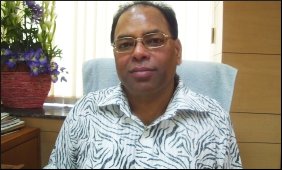
Need for reforms in govt. policies at state-level: Ashok Jain
|
|
|
|
| Top Stories |
 |
|
|
|
Saurabh Gupta | 26 Apr, 2008
The Chairman of Carpet Export Promotion Council Of India (CEPC), Ashok Jain in an exclusive interview to Saurabh Gupta, Correspondent, SME Times, has said that there is a need for reforms in Government polices specially at state-level for the carpet manufacturing and export Industry, which is one of the
leading carpet export country in the world.
Excerpts of the interview...
What are the challenges faced by carpet manufacturers and exporters?
Ashok Jain: There is a need to look into the government policies specially at the state-level and there should be one single policy for the entire nation. With the appreciation of the rupee, the carpet industry should be kept away from VAT and should be tax free. Recently the UP Government has imposed VAT. I think
this industry need support from Central and State governments by making it VAT free and Tax free.
How big is the Indian carpet industry today, in terms of export volume? What are the key export nations?
Ashok Jain: India has emerged as the biggest exporter of hand-woven carpets in the world. The country has grabbed 50 percent of the export market and 80 percent of United States market. Presently India exports for the year 2006-07 $800 million (Rs. 3675 crore) of total carpet industry.
Last year, Union Minister of State for Commerce Jairam Ramesh had warned carpet manufacturers against using child labor, which could lead to a ban on exports to the US and other western nations. Could you please throw some light on this issue?
Ashok Jain: Involvement of child labor caused a setback to the industry and this is a major concern for the carpet industry for the last four to five years and according to a recent study now, there are only 4 percent of child labor out of which 2 percent children are actually learning the skills of carpet-making from their parents.
Globalization has opened the doors for Indian small and medium carpet exporters to explore global markets. Do you see Indian small and medium carpet manufacturers and exporters having to close shop for their inability to compete with these foreign players?
Ashok Jain: We welcome globalization. I think globalization will only help the sector in generating more employment and enhancing the standard of living of small manufacturers and sellers in the carpet industry. It will help the industry to adapt cost-effective measures. Our members are mainly from the SME sector, but we do not have any threat from globalization as it (the carpet industry) is a personalized and skill-based sector. Several global players have indeed entered in this sector, but till date they have failed to succeed.
Our market is big and vision is very clear, but the main issue that concerns globalization is that of child labor. When we talk about the international market, each country has their own policies on child labor. Like in India, child labor is considered for children below 14 years, but in certain countries this age limit might differ depending on the economic condition of that particular country. So will you call it child labor if a child below 14 years is working in McDonalds in US or he is learning the skills of carpet making from his parents at the same age? The whole term of child labor in the carpet industry needs to be seen in a broader perspective. We need to be open minded and have to understand the ground realities.
Overseas customers are in awe of Indian carpets which are handmade and fine in quality. However cheap machine-made carpets are threatening the very existence of the Indian carpet industry. Do the council see this as a serious threat? How does the council prepare the ward off this threat?
Ashok Jain: A person who buys a cheap machine-made carpet does not know the difference between a hand-made carpet and machine-made carpet. With increasing buying power of our domestic consumers, people are actually turning to buying hand-made carpets over cheap machine-made ones. Our industry is very vast and and have lots of possibilities within the country and definitely globally. So although there is threat from machine made cheap carpets for this industry, I believe we can thaw this threat by giving consumers hand woven carpets with more intricate and exquisite designs.
It has seen that the art of hand woven carpets would die as machines have already started flooding the markets with economically competitive goods. How you see the future of hand woven carpets?
Ashok Jain: I already told you that handmade carpets is skill-based and now people around the world are aware about the differences between the handmade and machine-made products. We have lots of creativity, modern and ancient art in our carpets which is in high demand in the global markets.
To promote our industry have organized two annual carpet exhibitions - one in New Delhi and other in Varanasi. And we keep participating in different international exhibitions around the world to make people aware globally. We have opened 20 learning institute across the country for skill development and to promote the carpet industry in the global markets.
What according to you is the future of India's carpet industry?
Ashok Jain: The Indian Carpet Industry has potential for expansion since adequate skilled manpower and raw-material are available; requirement for capital is almost negligible; Indian products are accepted all over the world and are at par with international quality standards and are definitely competitive when it comes to pricing.
The Indian carpet industry has tremendous flexibility and adaptability. The industry have a large range of products to offer. India can supply carpets & floor coverings strictly in accordance with the requirement of consumers. This is the USP of the industry.
|
|
|
| |
|
|
|
|
|
|
|
|
|
|
|
|
|
|
| |
| Customs Exchange Rates |
| Currency |
Import |
Export |
US Dollar
|
₹94.25
|
₹92.55 |
UK Pound
|
₹125.95
|
₹121.95 |
Euro
|
₹108.95
|
₹105.3 |
| Japanese
Yen |
₹59.4 |
₹57.6 |
| As on 02 Apr, 2026 |
|
|
| Daily Poll |
 |
 |
| What is the biggest war impact on MSMEs? |
|
|
|
|
|
| Commented Stories |
|
|
|
|
|
|
| |
|