Staff Reporter | 03 Sep, 2026
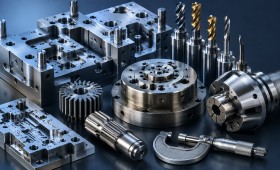
In a recent interaction with SME Times, Saravana Kumar from Lexis Tooling Systems Pvt. Ltd. shared insights into the company’s journey and growing presence in the precision tooling and engineering industry. Established in 2000 and headquartered in Coimbatore, Tamil Nadu, Lexis Tooling Systems has developed expertise in manufacturing and supplying precision collets, tool holding systems, work holding products, fixtures, adapters, and customized tooling solutions. With more than two decades of experience, an Indo US technology partnership, ISO 9001:2015 certification, modern manufacturing infrastructure, and a skilled team of more than 100 professionals, the company focuses on dimensional accuracy, reliability, repeatability, and long service life. Its solutions cater to automotive, aerospace, machine tools, die and mould, precision engineering, and general manufacturing applications.
1. What has helped Lexis Tooling Systems establish a strong presence in the precision tooling industry?
Lexis Tooling Systems has built its presence through a consistent commitment to precision engineering, quality, technological development, and customer focused solutions. Since its establishment in 2000, the company has invested in manufacturing capabilities, engineering expertise, quality systems, and product development to address the demanding requirements of modern machining. Its ability to offer both standard and specially customized tooling solutions has also helped it serve diverse industrial applications. The company combines skilled human resources, advanced manufacturing technologies, quality materials, and controlled production processes to develop reliable products. Its ISO 9001:2015 certification further reflects its structured approach to quality management. Over the years, this combination of technical knowledge, manufacturing experience, product consistency, and customer support has helped Lexis develop from an emerging manufacturer into an established precision tooling brand serving both Indian and international customers.
2. How does Lexis Tooling Systems maintain quality standards across its product range?
Quality is central to the manufacturing philosophy of Lexis Tooling Systems, and the company follows a comprehensive approach that extends beyond final product inspection. Quality considerations begin with material selection and continue through engineering, manufacturing, testing, finishing, and final verification. Qualified and experienced personnel conduct 100 percent inspection of finished products before they are delivered to customers. Products are evaluated against the company’s quality policy, customer requirements, product designs, accuracy specifications, and defined tolerances. This systematic approach is particularly important in precision tooling, where even a small dimensional deviation can affect machining performance. Lexis focuses on achieving zero defect products within guaranteed tolerances while maintaining durability, dimensional accuracy, corrosion resistance, and functional reliability. By embedding quality throughout the manufacturing process rather than treating inspection as a final step, the company works to ensure consistent performance in demanding industrial applications.
3. Why are precision tooling and work holding systems becoming increasingly important in modern manufacturing?
Precision tooling and work holding systems play an important role in modern manufacturing because industries are continuously moving toward tighter tolerances, higher productivity, automation, and greater consistency. Machining operations require tools and components that can provide rigidity, repeatability, accuracy, and reliable performance over extended operating periods. Even minor inaccuracies in clamping, alignment, or tool holding can influence machining results and ultimately affect the quality of finished components. Lexis Tooling Systems addresses these requirements through products such as precision ER collets, tool holders, adapters, chucks, fixtures, and work holding solutions. These products are designed to support stable machining operations and consistent component production. As manufacturers increasingly focus on productivity and operational efficiency, dependable tooling becomes an important part of the overall manufacturing process. Precision tooling therefore contributes not only to dimensional accuracy but also to reduced interruptions, improved machining consistency, and better utilization of production resources.
4. What role does technology and the Indo US partnership play in the growth of Lexis Tooling Systems?
Technology has played an important role in the development of Lexis Tooling Systems, particularly as the company has expanded its capabilities in precision manufacturing and product development. The company has established an Indo US technology partnership that provides an avenue for innovation and enables Lexis to remain connected with advancements in precision tooling and manufacturing technologies. However, technology is considered most effective when combined with engineering knowledge and skilled human resources. Lexis brings together people, machines, materials, and manufacturing expertise to create components that meet demanding industrial requirements. Continuous investment in engineering skills, quality systems, production capabilities, and product development supports this technology driven approach. Looking ahead, the company intends to strengthen research, design, production, quality control, marketing, and distribution capabilities. This combination of technology and engineering competence positions Lexis to respond effectively to evolving requirements in modern precision manufacturing.
5. How does Lexis Tooling Systems address different requirements across industrial applications?
Different industries and machining operations have different requirements concerning clamping, rigidity, dimensional accuracy, repeatability, tool compatibility, and service life. Lexis Tooling Systems addresses this diversity by offering a broad range of standard products along with specially engineered tooling solutions. Its portfolio includes Precision ER Collets, Tool Holders and Adapters, Work Holding Products, Hydrogrip Reduction Sleeves, Pull Studs, Chucks, Fixtures, and special tooling solutions. Products such as BT Tool Holder Short Shank, DE Chucks, Milling Mechanical Fixtures, ER Mini Chuck Side products, and CAT Pull Studs support various machining applications. For more specialized requirements, Lexis works with customers to understand their application and develop suitable tooling. This combination of readily available products and customized engineering enables the company to serve automotive, aerospace, machine tools, die and mould, precision engineering, and general manufacturing industries with application focused solutions.
6. What makes customized tooling solutions important for challenging machining applications?
Customized tooling becomes particularly important when standard products cannot fully address the dimensional, operational, or machining requirements of a specific application. Manufacturing processes can differ significantly depending on the component design, machine configuration, material, clamping requirements, and desired machining performance. Lexis Tooling Systems works closely with customers to understand these requirements and develop special tooling solutions suited to particular applications. Its approach is not limited to producing a physical component but focuses on developing a reliable tooling solution that can contribute to improved machining results. Engineering considerations include design, dimensional accuracy, material quality, and functional performance. By combining customer consultation with technical expertise and manufacturing capabilities, Lexis can address specialized industrial challenges while maintaining its quality standards. Customized tooling therefore gives manufacturers greater flexibility when dealing with complex machining requirements and helps them select solutions that are aligned with their operational objectives.
7. How important are the company’s people and engineering expertise in delivering precision solutions?
People remain a critical part of precision engineering despite the increasing role of advanced manufacturing technologies. Lexis Tooling Systems recognizes its human resources as an important strength of the organization and has a workforce of more than 100 professionals across different divisions. This includes engineers, designers, quality analysts, production personnel, and customer service professionals. Their combined knowledge enables the company to interpret customer requirements and translate them into practical tooling solutions. Teamwork also supports innovation and continuous improvement in production processes. Since requirements can vary considerably between applications, experienced professionals play an important role in identifying suitable products and assisting customers throughout their association with the company. This combination of technical understanding, production knowledge, quality awareness, and customer support strengthens Lexis’s ability to deliver consistent solutions. It also contributes to the company’s objective of developing long term relationships with customers across different industries.
8. What differentiates Lexis Tooling Systems from other precision tooling manufacturers?
Lexis Tooling Systems differentiates itself through its combination of precision manufacturing, broad product capabilities, customized solutions, quality management, and customer focused operations. The company does not approach tooling simply as the production of individual components; instead, it focuses on developing reliable solutions that support machining performance. Its products are designed with attention to dimensional accuracy, material quality, durability, corrosion resistance, functional performance, and long service life. The availability of both standard and bespoke tooling solutions gives customers flexibility according to their individual requirements. Lexis also emphasizes transparent business practices, timely order fulfillment, bulk industrial requirements, and technical support. Its modern manufacturing unit, ISO 9001:2015 certification, skilled workforce, and Indo US technology partnership further strengthen its capabilities. Together, these factors allow the company to offer manufacturers a broader value proposition based on accuracy, consistency, reliability, and long term operational performance rather than price alone.
9. How does Lexis Tooling Systems support manufacturers in improving productivity and operational efficiency?
Reliable tooling has a direct influence on the consistency and efficiency of machining operations. Lexis Tooling Systems supports manufacturers by providing products designed for accurate clamping, rigidity, repeatability, dimensional consistency, and dependable service life. When tooling performs consistently, manufacturers can reduce interruptions and maintain smoother production processes. Products such as collets, tool holders, adapters, chucks, fixtures, pull studs, and work holding systems are intended to support different machining requirements and challenging industrial applications. The company also offers customized solutions where specific operational problems require specially engineered tooling. Its focus on durable products, precision finish, wide clamping ranges, and application suitability helps customers address operational requirements while managing tooling related costs. By combining standard products with technical support and customized engineering, Lexis aims to help manufacturers achieve reliable machining performance, improve productivity, and maintain consistent output in demanding production environments.
10. What is the future outlook for Lexis Tooling Systems in the global precision manufacturing market?
The future outlook for Lexis Tooling Systems is closely connected with the continuing evolution of precision manufacturing, automation, tighter machining tolerances, and the growing demand for higher productivity. As manufacturers adopt increasingly advanced production processes, tool holding and work holding systems will need to provide greater rigidity, accuracy, repeatability, flexibility, and efficiency. Lexis intends to respond to these requirements through continued technological advancement, quality improvement, product development, and global expansion. The company plans to strengthen its research, design, manufacturing, quality control, marketing, and distribution capabilities while building on its Indo US technology partnership. Its established experience, skilled engineering team, modern manufacturing infrastructure, and commitment to quality provide a strong foundation for future growth. With precision tooling becoming increasingly important across automotive, aerospace, machine tools, die and mould, and general manufacturing applications, Lexis aims to expand its presence while continuing to provide precision engineered solutions that customers can rely on.