Bikky Khosla | 12 Mar, 2026
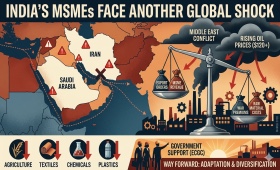
As if the uncertainty surrounding the US tariffs on our products was not enough, the recent war in the Middle East has come as a bolt from the blue for our MSME community, especially for our exporters. India exports numerous products to the Gulf nations, including agro products. With no consignment going there, these perishable products are incurring heavy losses to our MSME exporters.
No doubt, the government's move to offer insurance support to exporters, along with the new Custom norms for consignments returning to India to help them deal with the ongoing Middle East crisis, comes as a sigh of relief to the export community during these turbulent times. However the losses are unbearably high and may take several exporters to the state of bankruptcy. The closing of the Strait of Hormuz and rising War Premiums were already adding to the woes of exporters who are now struggling against a sudden and sharp escalation in the conflict between the US, Israel, and Iran.
I applaud our MSMEs and especially our exporters who have shown sturdy resilience in the earlier global disruptions. However, the current crisis poses a serious threat to the exports and our MSMEs, if it escalates further or continues through the month. The crisis if extended will lead to order cancellations and our exports will take a significant hit if that happens. We are already seeing the impact on our $11.8 billion agro-export market, with nearly 4 lakh metric tonnes of Basmati rice currently rotting in transit or at ports.
Other than the logistical hurdles and rising war premiums, the surge in crude oil prices to up to $120 will definitely have a rippling effect on the our manufacturing MSMEs. As a nation that is heavily dependent on energy imports, this will further lead to rise in raw material costs particularly for the textiles, chemicals and plastics sectors. These will thus result in thinner margins and reduced competitiveness in the global markets.
In response to the ongoing crisis, the government’s move to push for an ECGC-backed insurance scheme to absorb ‘war-risk’ premiums is a positive move to protect MSME liquidity. Also, the extension of export obligations until the end of August this year provides a breathing space for Indian MSMEs who are struggling with manufacturing and shipping delays. However, the question is, ‘Are these steps enough?’
As we move forward in the midst of this uncertainity, I would suggest that our MSMES actively utilize the new customs and insurance frameworks and explore market diversification to reduce over-reliance on volatile corridors. The way forward requires a combined effort and it requires the government to frame policies that shields the interests of the exporters and for exporters to remain agile to pivot through these turbulent times. The war is not ending any soon, so we need to adapt to the situation and in that lies our success.