|
|
|
|
US-Iran Ceasefire Fails to Ease MSME Export Pain
|
|
|
|
| AI Generated Image |
| Top Stories |
 |
|
|
|
Bikky Khosla | 09 Apr, 2026
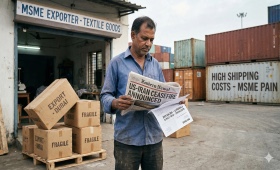
As we all hold our breaths in anticipation of the US-Iran ceasefire announcement, MSMEs, especially exporters, are still not out of the woods. This month-long disruption and the uncertainty prevailing currently in the Gulf nations, which are our major export partners, will have long-term effects on our business.
I had, over the few weeks, spoken to several small businesses and each one of them told me that their costs have increased considerably. Even a business manufacturing housekeeping products felt the hit of war. Increase in crude oil prices meant that PET bottles, which is the most essential part of its business, are produced from petrochemicals derived from fossil fuels. With the closing of the Strait of Hormuz PET bottle manufacturers were compelled to raise the price of their products because their input costs had increased significantly. This is just a small instance where the West Asia unrest has adversely affected our small businesses. It goes without argument when I say that all sectors have been affected and sadly will have long-term effects of the war.
The only positive aspect I see is the various steps thankfully taken by our government to give our exporters some relief. Exporters need to take advantage of the enhanced ECGC credit insurance, a 3-Step RELIEF Package announced recently and the direct financial support for MSMEs. Meanwhile the Regulatory and Logistic Easing (CBIC & Ports) can ease the pain of exporters to some extent. The Reserve Bank of India (RBI) easing payment timelines to help with cash flow is a timely move, I would say. In addition, SEZ units are now allowed to sell up to 30% of their output in the domestic market (From April 2026 - March 2027) with lower customs duties to help them maintain production. That said, I feel these measures, while helpful, may not be sufficient to fully offset the scale of disruption MSMEs are currently facing.
In a nutshell, the scenario is still bleak but we need to find ways to survive this dark period. MSMEs need to build more resilient export strategies to reduce overdependence on volatile regions like West Asia.
|
|
|
| |
|
|
|
|
|
|
|
|
|
|
|
|
|
|
| |
| Customs Exchange Rates |
| Currency |
Import |
Export |
US Dollar
|
₹96.5
|
₹94.8 |
UK Pound
|
₹132.25
|
₹128.15 |
Euro
|
₹113.6
|
₹109.8 |
| Japanese
Yen |
₹61.3 |
₹59.45 |
| As on 03 Sep, 2026 |
|
|
| Daily Poll |
 |
 |
| What’s your biggest challenge with the 45-day payment rule? |
|
|
|
|
|
| Commented Stories |
|
|
|
|
|
|
| |
|