|
|
|

|
Momentum in economic recovery to continue in FY23: RBI
|
|
|
|
| Top Stories |
 |
|
|
|
IANS | 27 May, 2022
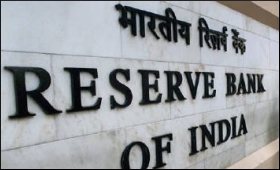
India's economic recovery from the pandemic shock has sustained in FY22
and the momentum is expected to broadly continue through the ongoing
FY23, though with risks of downside from the geopolitical shock and its
spillovers, said the RBI's Annual Report for 2021-22 released on Friday.
Despite the risks, the report said the recovery is
"getting entrenched and is broadening", besides the Union Budget for
FY22 envisioned the roadmap for 'India at 100', with a focus on demand
side measures.
The substantial increase in government capital
expenditure outlay could crowd-in private investment and "propel a
virtuous cycle, thereby improving aggregate demand".
Furthermore,
the National Infrastructure Plan (NIP) amounting to Rs 100 lakh crore
and the National Monetisation Pipeline (NMP) involving Rs 6 lakh crore -
both targeted for completion by FY25, are also expected to give a major
thrust to infrastructure spending, it added.
"The focus on
supply side management through 'process reforms', facilitating the
smoothening and simplification of processes in some sectors where
government's presence as a facilitator or regulator is necessary, would
help improve the resilience of the Indian economy."
Overall
consumer and business confidence remains resilient in spite of the third
wave on the back of the accelerated pace of vaccination and better
prospects for economic activity.
"A full recovery in aggregate
demand is, however, contingent on a turnaround in private investment. On
the supply side, there is a resurgence in mining and manufacturing
sectors. The services sector, which felt the brunt of the pandemic, is
staging a broad-based recovery since Q2FY22."
The report stressed upon reforms in the labour market so as to adapt to the pandemic by reskilling workers.
On
financial markets in FY22, the report said that abundance of liquidity
and accommodative monetary policies in major economies had pushed
financial asset prices to all-time highs. The market was bolstered also
by stimulus packages and easing of Covid-19-led restrictions.
The
financial markets in India remained vibrant amidst easy liquidity
conditions, although the severe second wave of the pandemic during
April-May 2021 dampened sentiments. The equity market continued to
register double digit growth in FY22 in sync with the global peers with
optimism on large scale vaccine rollouts and resurgence in economic
activities.
Notably, the direct participation of retail investors
in equities continued to increase, with the opening of 3.46 crore Demat
accounts during FY22, as against 1.42 crore opened during the previous
year. During the fiscal, on an average, 28.8 lakh Demat accounts were
opened every month, which is higher than 11.8 lakh per month in the
previous year and 4.2 lakh Demat accounts per month in 2019-20, the
annual report said.
|
|
|
| |
|
|
|
|
|
|
|
|
|
|
|
|
|
|
| |
| Customs Exchange Rates |
| Currency |
Import |
Export |
US Dollar
|
₹96.5
|
₹94.8 |
UK Pound
|
₹132.25
|
₹128.15 |
Euro
|
₹113.6
|
₹109.8 |
| Japanese
Yen |
₹61.3 |
₹59.45 |
| As on 03 Sep, 2026 |
|
|
| Daily Poll |
 |
 |
| What’s your biggest challenge with the 45-day payment rule? |
|
|
|
|
|
| Commented Stories |
|
|
|
|
|
|
| |
|