|

|
Needs an alternative of bankruptcy to save business: FM
|
|
|
|
| Top Stories |
 |
|
|
|
SME Times News Bureau | 21 Aug, 2017
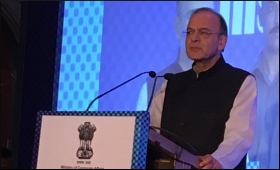
Previous laws were only partly effective in resolving the problems of insolvency and bankruptcy in the corporate world and one would have to wait to judge the effectiveness of the current mechanism to deal with the issue. There needs to be an alternative mechanism by which businesses can be saved, Finance Minister Arun Jaitley said on Saturday.
"Earlier, if companies were for insolvency, they got stuck in courts indefinitely. The SICA merely provided an 'Iron Curtain' against debtors, otherwise it was an absolute failure and could achieve very little of the purpose for which it was created," Jaitley said.
The Debts Recovery Tribunal (DRT) was somewhat faster, but not as effective as envisaged, while the Sick Industrial Companies Act (SICA) failed and the Securitisation and Reconstruction of Financial Assets and Enforcement of Security Interest Act (SARFAESI) served a limited purpose since being a creditor inherently put one at a disadvantage under it, he said.
He added that while the Reserve Bank Of India's (RBI) previous efforts to tackle insolvency met with "some success", eventually it was still tough for creditors to change the defaulting debtors.
Jaitley, while addressing a "National Conference on Insolvency and Bankruptcy: Changing Paradigm", organised by the Ministry of Corporate Insolvency and Bankruptcy Board of India, urged debtors to make sure the debt is serviced under the insolvency mechanism though the ultimate objective is not liquidation but resolution of assets.
"The cumulative effect of the amended laws is loud and clear that the debtors will have to make sure that debts are serviced. There needs to be an alternative mechanism by which businesses can be saved. The ultimate objective is not liquidation but save the businesses by bringing in new entrepreneurs or with the existing partners and save the valuable assets," he said.
The finance minister said while more time is needed to understand the efficacy of the National Company Law Tribunal (NCLT), said it must be ensured timelines given by the NCLT are adhered to.
The issue is being currently addressed by the Insolvency and Bankruptcy Board of India (IBBI).
It will facilitate a better understanding of intricacies of the Insolvency and Bankruptcy Code, 2016 (IBC - 'Code'), share the experiences gained during the initial nine months and also discuss the challenges that need to be overcome.
"The institution of resolution professionals, has to remain detached and avoid possible conflict of interest. There is required an effective supervision, the powers of resolution mechanism needed be clearly defined," he said.
The IBC, a key economic reform, provides the much-needed unified legal framework to resolve insolvency and afford faster and efficient exit framework for corporates.
Through its time-bound processes, the IBC aims to provide greater certainty around the bankruptcy process and bring the Indian statutory regime at par with some of the most legally advanced jurisdictions in the world.
In the ninth month of the IBC's implementation, Saturday's conference will facilite better understanding of its intricacies and the challenges that need to be overcome.
It was also addressed by RBI Governor Urjit Patel, SEBI Chairman Ajay Tyagi, IBBI Chairman M.S. Sahoo, while the NCLT President, Justice M.M. Kumar (retd) delivered the valedictory address.
The conference was followed by a panel discussion on 'Creditor & Debtors Perspective - Striking the Balance' in which top names from the corporate world participated.
|
|
|
| |
|
|
|
|
|
|
|
|
|
|
|
|
|
|
| |
| Customs Exchange Rates |
| Currency |
Import |
Export |
US Dollar
|
₹96.5
|
₹94.8 |
UK Pound
|
₹132.25
|
₹128.15 |
Euro
|
₹113.6
|
₹109.8 |
| Japanese
Yen |
₹61.3 |
₹59.45 |
| As on 03 Sep, 2026 |
|
|
| Daily Poll |
 |
 |
| What’s your biggest challenge with the 45-day payment rule? |
|
|
|
|
|
| Commented Stories |
|
|
|
|
|
|
| |
|