|

|
Exports up 5.9 pc in fourth quarter of 2012-13: RBI
|
|
|
|
| Top Stories |
 |
|
|
|
SME Times News Bureau | 12 Sep, 2013
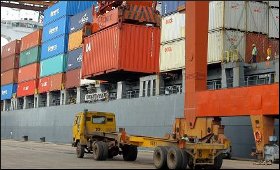
India's merchandise exports grew 5.9 percent while imports declined marginally by 1 percent in the fourth quarter of 2012-13 fiscal year, leading to a narrowed down trade deficit of $ 45.6 billion during the period, according to RBI data.
"In Q4 of 2012-13 merchandise exports (BoP basis) recorded a growth of 5.9 percent while imports declined marginally by 1 percent owing mainly to a decline in non-oil non-gold imports reflecting a decline in domestic activity. As a result, trade deficit narrowed down toUS$ 45.6 billion in Q4 of 2012-13," said the central bank in its September monthly bulletin.
Current account deficit for the period moderated sharply to 3.6 percent of GDP in Q4 of 2012-13 after reaching a historically high level of 6.5 percent in Q3 of 2012-13, mainly on account of narrowing down of trade deficit during this period, it added.
According to the bank, trade deficit in 2012-13 remained at an elevated level of US$ 195.7 billion which coupled with the decline in net invisible earnings due to higher outgo of investment income payments and only a modest rise in net services receipts led to a widening of CAD.
"Nevertheless, higher inflows under financial account enabled full financing of CAD and led to an accretion to the foreign exchange reserves of US$ 3.8 billion," it pointed out.
The RBI data also shows a decline of 7.7 percent in net invisibles in Q4 of 2012-13 on account of decline in net services, transfers and income receipts.
Net capital also inflows under financial account moderated in Q4 of 2012-13 due to slowdown in net portfolio investment and net repayment of loans by banks and corporate but were adequate to finance CAD, resulting in accretion of US$ 2.7 billion to the foreign exchange reserves.
External debt, as at end-March 2013, was placed at US$ 390.0 billion (21.2 percent of GDP) recording an increase of US$ 44.6 billion (12.9 percent) over the end-March 2012 level on account of significant increase in short-term trade credit, External Commercial Borrowings (ECBs) and rupee denominated Non-resident Indian (NRI) deposits.
India's foreign exchange reserves provided a cover of 74.9 percent to the external debt stock at the end of March 2013 as compared with 85.2 percent at end-March 2012.
The RBI monthly bullentin also viewed that consumer confidence has remained subdued in terms of CSI remaining at 101.7 in the last two rounds which is the lowest in the history of the survey.
RBI's quarterly Consumer Confidence Survey of Households provides an assessment of the consumer sentiments of around 5,400 urban respondents across six cities based on their perceptions of the economic conditions, household circumstances, income and spending, prices and employment prospects.
|
|
|
| |
|
|
|
|
|
|
|
|
|
|
|
|
|
|
| |
| Customs Exchange Rates |
| Currency |
Import |
Export |
US Dollar
|
₹95.3
|
₹93.6 |
UK Pound
|
₹127.7
|
₹123.7 |
Euro
|
₹110.65
|
₹106.9 |
| Japanese
Yen |
₹59.75 |
₹57.9 |
| As on 24 Jun, 2026 |
|
|
| Daily Poll |
 |
 |
| What’s your biggest challenge with the 45-day payment rule? |
|
|
|
|
|
| Commented Stories |
|
|
|
|
|
|
| |
|