|

|
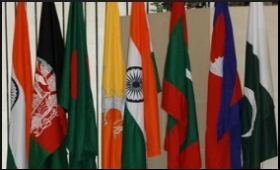
India assures greater market access to SAARC nations
|
|
|
|
| Top Stories |
 |
|
|
|
SME Times News Bureau | 17 Feb, 2012
India Thursday said it will take pro-active measures to reduce barriers in trade and services, in a bid to ensure greater economic integration in the South Asia region.
Talking to mediapersons on the sidelines of the seventh ministerial meeting of the South Asia Free Trade Agreement (SAFTA) here, Commerce and Industry Minister Anand Sharma said India would substantially reduce tariff barriers for the countries like Pakistan and Sri Lanka too, as it has done for the least developed countries like Bangladesh, Nepal and Bhutan.
"If other member countries take one step, we are committed to move two steps forward," Sharma said.
The minister said India provides zero duty market access for 99.7 percent of its goods to least developed countries (LDCs) of the South Asian Association for Regional Cooperation (SAARC).
India has reduced sensitive list of goods for least developed countries to 25 from earlier 480.
"We are equally keen to substantially reduce sensitive list for non-LDCs so that the SAARC region can truly emerge as a regional free trade area in its true sense," Sharma said while addressing the highest decision-making body of SAFTA.
Commerce Secretary Rahul Khullar said trade in services was also discussed in the meeting.
Khullar said although India was taking pro-active steps in liberalising norms for trade in services, it had to be careful in the approach.
"The manner in which services are negotiated are far more complex than the manner in which trade in goods are negotiated. In services there are very complicated schedules that need to be devised. You have to decide whether you are going to give national treatment or not, you have to decide whether there are going to be any limitation in the form of access there are a lot of complex issues," Khullar said.
Of the eight SAARC member countries, five are categorised as LDCs. Bangladesh, Bhutan, Nepal, Maldives and Afghanistan are LDCs while India, Pakistan and Sri Lanka are non-LDCs.
The minister reiterated India's commitment of implementing the SAFTA commitments in letter and spirit.
Under the conventions of SAFTA, member countries are required to clearly spell out a list of goods that it would not want to trade.
Pakistan maintains a "positive list" of 1,945 items which are allowed to be imported from India. Under SAFTA, Pakistan operates a sensitive list (negative list) of 1,169 items.
In a major step forward towards implementation of SAFTA, Pakistan Wednesday said it would move from "positive list" to "negative list" trade regime with India by the end of this month.
Reacting to the development, president of the Federation of Indian Chambers of Commerce and Industry (Ficci) R.V. Kanoria said the South Asian countries should also have a regional investment promotion and protection agreement for promoting intra-regional investment and trade.
"Regional motor vehicular agreement for seamless movement of goods and people should be expedited," Kanoria said.
|
|
|
| |
|
|
|
|
|
|
|
|
|
|
|
|
|
|
| |
| Customs Exchange Rates |
| Currency |
Import |
Export |
US Dollar
|
₹94.2
|
₹92.5 |
UK Pound
|
₹128.85
|
₹124.8 |
Euro
|
₹112.2
|
₹108.45 |
| Japanese
Yen |
₹59.85 |
₹58 |
| As on 06 May, 2026 |
|
|
| Daily Poll |
 |
 |
| What is the biggest war impact on MSMEs? |
|
|
|
|
|
| Commented Stories |
|
|
|
|
|
|
| |
|