|
|
|

|
Industry welcomes RBI's mid year monetary policy
|
|
|
|
| Top Stories |
 |
|
|
|
SME Times News Bureau | 28 Oct, 2009
Industry and think tanks on Tuesday welcomed the central bank's shift in monetary policy stance, hoping that some parts of the stimulus would be retained as the economic recovery was still in a nascent stage.
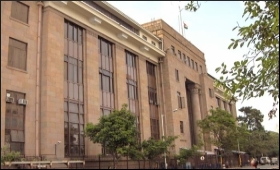
The Reserve Bank of India (RBI) slightly tightened its monetary policy by raising the statutory liquidity ratio by 100 basis points while retaining most policy rates, with signs of an industrial recovery providing the necessary cushion.
"We studied all arguments, for and against the easing of stimulus measures. The balance of judgement is to sequence the exit so that the recovery process is not hampered and inflation is anchored," said Governor D. Subbarao at the central bank's headquarters in Mumbai.
It, however, removed emergency liquidity support measures by ending the repurchase facility for non-banking finance companies (NBFC), mutual funds and housing finance companies.
"RBI's move to keep the repo as well as reverse repo rates unchanged was in the right direction," said Chandrajit Banerjee, director general of the Confederation of Indian Industry (CII).
"It is prudent to retain the monetary stimulus provided a few months ago, which along with the fiscal stimulus has helped in economic revival of the Indian economy," Banerjee added.
"The decision to introduce a fourth category of NBFCs as 'infrastructure NBFCs' is a welcome move and has been one of the CII's recommendations to facilitate infrastructure funding."
Among its liquidity tightening measures was ending a foreign exchange swap facility for banks, and a cut in export credit refinance facility to levels before the crisis at 15 percent from the current 50 percent with immediate effect.
"The policy signals beginning of a gradual withdrawal of exceptional measure taken by the RBI to tackle the crisis. Hopefully, the policy will continue to ensure the availability of credit at a time when the industrial growth has started to revive", said Harsh Pati Singhania, president of the Federation of Indian Chambers of Commerce and Industry (FICCI).
"While the RBI has decided to restore the export credit refinance facility to the pre-crisis level, it should not result in the cost of export finance increasing as there seems to be adequate liquidity in the system", said Singhania.
Singhania also said the move to introduce plain vanilla over-the-counter (OTC) single-name credit default swaps and enlarging the list of business correspondents will help the Indian financial sector move up the value chain, while achieving financial inclusion.
The Associated Chambers of Commerce and Industry of India (Assocham) said the monetary policy announcements were on expected lines and struck a fine balance between growth and inflation.
"The announcements are indicative of the fact that RBI has set its mood to review the ongoing interest rate regime in view of inflationary expectations in its next quarterly review policy, " said Assocham president Swati Piramal.
However, Nikhilesh Bhattacharyya, economist at Moody's economy.com, the research arm of global rating agency Moody's, said any hike in policy rates were still a long way off.
"Despite the high chance of inflation expectations rising in coming months, we do not expect the RBI to begin raising its main policy rates till the second quarter of 2010," said Bhattacharyya.
"A steady improvement in credit growth and investment are expected to prompt the RBI to gradually raise the repo rate to six percent by the fourth quarter of 2010."
|
|
|
| |
|
|
|
|
|
|
|
|
|
|
|
|
|
|
| |
| Customs Exchange Rates |
| Currency |
Import |
Export |
US Dollar
|
₹94.2
|
₹92.5 |
UK Pound
|
₹128.85
|
₹124.8 |
Euro
|
₹112.2
|
₹108.45 |
| Japanese
Yen |
₹59.85 |
₹58 |
| As on 06 May, 2026 |
|
|
| Daily Poll |
 |
 |
| What is the biggest war impact on MSMEs? |
|
|
|
|
|
| Commented Stories |
|
|
|
|
|
|
| |
|