|
|
|

|
2009-10 will be more challenging: Subbarao
|
|
|
|
| Top Stories |
 |
|
|
|
Namrata Kath Hazarika | 27 Mar, 2009
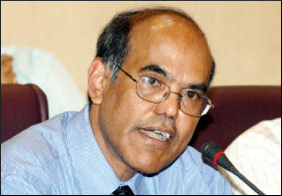
Year 2009-10 is going to be more challenging, Reserve Bank of India (RBI) Governor D. Subbarao said in New Delhi on Thursday.
Subbarao said, "It is not clear when the recovery would start in the year 2009-10. I think at this moment it looks like 2009-10 is the most challenging year as compared to 2008-09."
He mentioned that year 2008-09 has been beneficial as the first two quarters have not been impacted by economic crisis and actually have seen straight growth. The crisis has hit the last two quarters of the financial year 2008-09.
The RBI chief also pointed out that the green field projects of year 2008-09 are going to be continued but the brown field projects which requires fresh investments remain canceled for the 2009-10. So, unless freshness and competence revive, the fiscal year 2009-10 is going to be the most challenging year for the country.
He said, "There are divided opinions in this country. Some people believe that India can start recovering even before the world starts recovering. Some people believe that global recovery is both a necessary and condition for India to recover. But I believe India can only recover until and unless there is some stability in the global system."
Underlining views on interests rates, he said, "Traditionally, it is a concern that Indian interests are higher than competitors' interests rates. I believe interests should come down for India to be more competitive."
"RBI can only set the monitory policy rates but the policy rates can only transmit through the banks. However, we are investigating the transmission mechanisms as well, " he added.
He further said, "Even in a non-crisis situation, RBI's intellectual exercises have been monitoring the transmission from the policy rates to the banks lending rates. In a crisis like this the transmission system might even get more clogged."
Further, K.V.Kamath, President, Confederation of Indian Industry (CII) said, "Interests rates should come down to single digit. However, things are moving in that direction and there are some barriers left. Deposit rates have come down and there has been easing in the liquidity from the central bank as well."
He also mentioned that 10 years bond should have been at around 5 percent. But it has been spiked to 6 percent.
Moreover, he expects that the banking industry flow of credit should not have slowed down.
"Things are turning out in positive direction and we would probably reach full normalcy by September 2009 making the corporate India competitive again," he added.
|
|
|
| |
|
|
|
|
|
|
|
|
|
|
|
|
|
|
| |
| Customs Exchange Rates |
| Currency |
Import |
Export |
US Dollar
|
₹94.2
|
₹92.5 |
UK Pound
|
₹128.85
|
₹124.8 |
Euro
|
₹112.2
|
₹108.45 |
| Japanese
Yen |
₹59.85 |
₹58 |
| As on 06 May, 2026 |
|
|
| Daily Poll |
 |
 |
| What is the biggest war impact on MSMEs? |
|
|
|
|
|
| Commented Stories |
|
|
|
|
|
|
| |
|