|
|
|

|
'RBI needs to take additional measures to step up MSME credit'
|
|
|
|
| Top Stories |
 |
|
|
|
Staff Reporter | 03 Apr, 2009
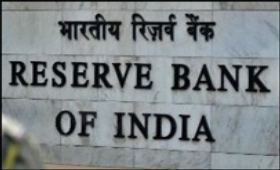
In its meeting with the Banks and Economic Secretaries, chaired by the Cabinet Secretary to discuss the flow of credit from banks to industry, CII recommended that in a way to help MSME sector, RBI needs to take additional measures to step up bank credit.
According to the CII note, Credit to MSMEs has been particularly weak, inhibiting their ability to deal with such issues as elongated payment cycles. The RBI needs to take additional measures to step up bank credit, especially since other sources of funding such as equity issues have completely dried up. For MSMEs, the RBI may consider setting a sub-target under priority sector lending.
CII made further recommendations for dealing with the current economic slowdown.
CII said, one reason why interest rates have not fallen as steeply as they should have is that the signal from the bond markets has been to the contrary.
"The Government and RBI should find a way to manage the government borrowing programme so that bond yields do not remain out of line with the fundamentals of the economy. Lending rates should have fallen much faster, given the current weakness in real economic data and the decline in inflation," said Venu Srinivasan, President, CII.
If the yields on Government securities remain high, banks will not be able to reduce their lending rates and Indian companies and consumers will continue to face one of the highest interest rates in the world.
Further, this will encourage banks to park their funds in government bonds and the liquidity created by the RBI’s actions will not flow to the real sector. CII therefore recommended the following:
- 50 basis point reduction in repo and reverse repo rates to 4.5 and 3.0 per cent respectively;
- 50 basis point reduction in the Savings Bank rate
- Targets to be set by the RBI for monetization of the deficit together with a relaxation of the FRBM Act.
The second issue is that banks have become risk averse since the onset of the financial crisis. They have slowed down their lending fearing an increase in default rates. With bank credit growing at around 18% currently, it is unlikely that the RBI’s target of 24% for FY2009 will be met.
The RBI may also consider pushing back the adoption of Basel II norms for a year in order to ease pressure on banks’ capital ratios.
Third, the Government and RBI need to take some steps to attract more foreign savings using the NRI deposit route. For this, it is recommended that the interest rate on FCNR/ NRE deposits be deregulated. The RBI started linking the FCNR/NRE rates to Libor in 2004 in order to reduce NRI flows, once the rupee began appreciating. Now that the currency is facing pressure to depreciate, such a ceiling on interest rates is no longer logical.
CII had suggested the formation of an informal group comprising Banks, the Government, RBI and industry to deal with sectoral issues. With the approval of the Cabinet Secretary for forming such a group, CII has strongly appreciated the decision of the Government and welcome the move.
CII also recommended some changes in the steps taken by the RBI. For example, NBFCs should have direct access to the RBI for the refinancing that is currently available to them via commercial banks.
This would lower the interest rate at which NBFCs can access funds. Similarly, the Commercial Vehicle sector should have a direct refinance window from the RBI, given that it is eligible for priority sector funding.
CII has made recommendations for ensuring an improved flow of funds to specific sectors. These included infrastructure, NBFCs, automobiles and auto components, housing, SMEs, textiles, gems and jewellery and exports. To take an example, CII recommended that the exposure limits of banks have to be relaxed to satisfy the requirements of the infrastructure sector. The cost of funds also needs to come down to make projects in the infrastructure sector viable. This can be done by providing a refinance window to banks against lending to the core sector.
The global financial crisis has severely impacted India’s export sector which is dominated by small and medium scale enterprises in labour-intensive sectors such as textiles, leather, gems and jewellery, plastics and farm products.
The global crisis has increased the difficulty for Indian exporters to raise funds, especially in foreign currency. CII suggested that long-term loans on concessional terms be provided to qualified Indian exporters with good track record in past three years. These loans would help in providing marketing assistance to exporters, especially from small and medium sized enterprises.
|
|
|
| |
|
|
|
|
|
|
|
|
|
|
|
|
|
|
| |
| Customs Exchange Rates |
| Currency |
Import |
Export |
US Dollar
|
₹94.2
|
₹92.5 |
UK Pound
|
₹128.85
|
₹124.8 |
Euro
|
₹112.2
|
₹108.45 |
| Japanese
Yen |
₹59.85 |
₹58 |
| As on 06 May, 2026 |
|
|
| Daily Poll |
 |
 |
| What is the biggest war impact on MSMEs? |
|
|
|
|
|
| Commented Stories |
|
|
|
|
|
|
| |
|