|

|
'India needs to hike yield of pulses'
|
|
|
|
| Top Stories |
 |
|
|
|
SME Times News Bureau | 23 Dec, 2011
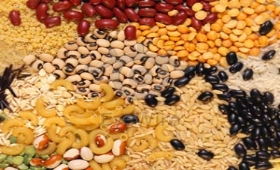
Stating that yield per hectare of pulses in India is low compared to the world average, the country's apex body of pulses and grains industry and trade Thursday called for increasing the yield as the dependency on import is growing day by day.
"In the pulses production, yield per hectare is the lowest though the country is the largest consumer of the pulses. India's yield per hectare is around 600 kg per hectare whereas world average is 1,200 kg per hectare," India Pulses and Grains Association (IPGA) vice-president Bimal Kothari told reporters here.
"Some of the countries like Canada achieved even 1,900 kg per hectare yield. Yield is the major issue. We do not need to increase land mass, but to increase yield," he said.
He said if the country could able to increase the yield in pulses, it could even export instead of importing.
"Africa and Myanmar produce 1,000 kg per hectare. Why cannot we? If we increase the yield by 200-300 kg per hectare, we would produce 7-8 million tonnes extra which we can export," he said.
Currently, India imports around three million tonnes of pulses.
"If the current production trend remains, the country has to import even 7-8 million tonnes in 2020. Import requirement is increasing day by day, we used to import 1 or 2 million tonnes in 1990," he noted.
Kothari also expressed concerns over India's low per capita consumption of pulses amid wide-spread protein deficiency and low protein intake.
"While the per capita consumption of pulses is very low, wide-spread protein deficiency and protein intake for poor is the challenge. India's per capita pulses consumption decreases to 25 gm per person from 65-70 gm per person in 1960s,"he said.
"But in the last three decades production has been stagnant to average 14 million tonnes," he added.
|
|
|
| |
|
|
|
|
|
|
|
|
|
|
|
|
|
|
| |
| Customs Exchange Rates |
| Currency |
Import |
Export |
US Dollar
|
₹94.2
|
₹92.5 |
UK Pound
|
₹128.85
|
₹124.8 |
Euro
|
₹112.2
|
₹108.45 |
| Japanese
Yen |
₹59.85 |
₹58 |
| As on 06 May, 2026 |
|
|
| Daily Poll |
 |
 |
| What is the biggest war impact on MSMEs? |
|
|
|
|
|
| Commented Stories |
|
|
|
|
|
|
| |
|