|
|
|

|
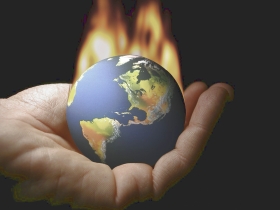
Climate change increases risk of wildfires: Study
|
|
|
|
| Top Stories |
 |
|
|
|
IANS | 14 Jan, 2020
Human-induced climate change has already increased the risk of wildfires
globally, researchers say, adding that these wildfires will become more
common in future.
In light of the Australian fires, researchers
from the University of East Anglia, Met Office Hadley Centre, University
of Exeter and Imperial College London have conducted a Rapid Response
Review of 57 peer-reviewed papers published since the IPCC's Fifth
Assessment Report in 2013.
All the studies show links between
climate change and increased frequency or severity of fire weather -
periods with a high fire risk due to a combination of high temperatures,
low humidity, low rainfall and often high winds - though some note
anomalies in a few regions.
"Wildfires can't be prevented, and
the risks are increasing because of climate change. This makes it urgent
to consider ways of reducing the risks to people," said study
researcher Iain Colin Prentice from Imperial College London.
Rising
global temperatures, more frequent heatwaves and associated droughts in
some regions increase the likelihood of wildfires by stimulating hot
and dry conditions, promoting fire weather, which can be used as an
overall measure of the impact of climate change on the risk of fires
occurring.
Observational data, published on ScienceBrief, shows
that fire weather seasons have lengthened across approximately 25 per
cent of the Earth's vegetated surface, resulting in about a 20 per cent
an increase in global mean length of the fire weather season.
"Overall, the 57 papers reviewed clearly show human-induced warming has
already led to a global increase in the frequency and severity of fire
weather, increasing the risks of wildfire," said study lead author
Matthew Jones from the University of East Anglia.
"This has been
seen in many regions, including the western US and Canada, southern
Europe, Scandinavia and Amazonia. Human-induced warming is also
increasing fire risks in other regions, including Siberia and
Australia," Jones added.
"However, there is also evidence that
humans have significant potential to control how this fire risk
translates into fire activity, in particular through land management
decisions and ignition sources," Jones said.
At the global scale,
burned area has decreased in recent decades, largely due to clearing of
savannahs for agriculture and increased fire suppression.
In
contrast, burned area has increased in closed-canopy forests, likely in
response to the dual pressures of climate change and forest degradation.
"Fire
weather does occur naturally but is becoming more severe and widespread
due to climate change. Limiting global warming to well below 2 degree
celsius would help avoid further increases in the risk of extreme fire
weather," said study researcher Richard Betts.
|
|
|
| |
|
|
|
|
|
|
|
|
|
|
|
|
|
|
| |
| Customs Exchange Rates |
| Currency |
Import |
Export |
US Dollar
|
₹96.5
|
₹94.8 |
UK Pound
|
₹132.25
|
₹128.15 |
Euro
|
₹113.6
|
₹109.8 |
| Japanese
Yen |
₹61.3 |
₹59.45 |
| As on 03 Sep, 2026 |
|
|
| Daily Poll |
 |
 |
| What’s your biggest challenge with the 45-day payment rule? |
|
|
|
|
|
| Commented Stories |
|
|
|
|
|
|
| |
|