|

|
BRICS approve agenda on demographic issues
|
|
|
|
| Top Stories |
 |
|
|
|
IANS | 14 Feb, 2015
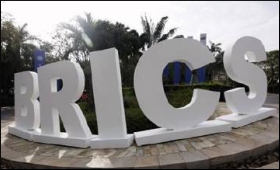
The BRICS bloc of countries -- Brazil, Russia, India, China and South Africa -- have approved a joint agenda on demographic issues drawn up at the BRICS presidential summit in July last year in the Brazilian city of Fortaleza.
The agenda was ratified Thursday during the BRICS Seminar of Officials and Experts on Population Matters which began in Brasilia on Tuesday and will end Friday.
The agenda for cooperation on population issues will remain in effect until 2020 and draw inspiration from the cases of excellence in these countries.
The first ministerial meeting addressed problems such as maternal mortality, AIDS and sexually transmitted diseases, rural and urban migration, urbanisation, old age and gender differences in the labour market, among others.
"We are all facing major population challenges and to overcome them we are going to need innovative policies and to improve the quality of existing policies," Brazilian Deputy Minister for Strategic Affairs Ricardo Paes de Barros, told reporters.
Paes de Barros said that Brazil could help South Africa where, according to the official, 20 percent of the adults suffer from AIDS, and India and China where rural to urban migration is very common.
"In maternal mortality, we have more to learn than to teach. Because the country is not going to meet the millennium goal," he admitted.
Russian First Deputy Minister of Labour and Social Security Sergei Velmyaykin announced that the third seminar would be held in his country, adding that the issues confronting Russia includes an aging population and migration.
Meanwhile, the delegation from the Indian ministry of health and family welfare said that 30 percent of its country's population lived in urban areas but that the percentage could cross 90 percent in the next 70 years.
Vice Minister of the National Health and Family Planning Commission of China, Wang Peilna, said that one of the main problems facing the country was also an aging population with more than 200 million people over 65 and a need to improve their quality of life.
Special Advisor to the department of social development of South Africa Sipho Shezi spoke about human rights and the success stories in all the member countries which could serve as an example for other members of the emerging bloc.
The next ministerial meeting to address problems of demography will be held in 2018 in China.
|
|
|
| |
|
|
|
|
|
|
|
|
|
|
|
|
|
|
| |
| Customs Exchange Rates |
| Currency |
Import |
Export |
US Dollar
|
₹88.70
|
₹87 |
UK Pound
|
₹119.90
|
₹116 |
Euro
|
₹104.25
|
₹100.65 |
| Japanese
Yen |
₹59.20 |
₹57.30 |
| As on 30 Oct, 2025 |
|
|
| Daily Poll |
 |
 |
| Who do you think will benefit more from the India - UK FTA in the long run?
|
|
|
|
|
|
| Commented Stories |
|
|
|
|
|
|
| |
|