|

|
Difficult times ahead for exporters in first half of 2012: FIEO chief
|
|
|
|
| Top Stories |
 |
|
|
|
Saurabh Gupta | 07 Feb, 2012
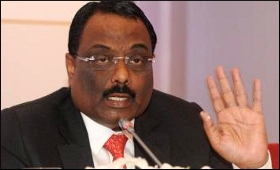
The first half of next fiscal will be more challenging for Indian exporters, said President, Federation of Indian Export Organisations (FIEO), M. Rafeeque Ahmed to SME Times in an exclusive interview.
Excerpts of the interview...
How you see the next fiscal for exports as there was a subdued growth in the sector in the month of December?
M. Rafeeque Ahmed: While 25.8 percent growth in first nine months looks impressive but the same is much less than 33.2 percent growth achieved in first eight months of the current fiscal and points to challenging times ahead. The percentage growth in respect of most of the sectors have also come down at the disaggregated level. However, with still three months to go, we will be able to achieve over USD 280 billion in 2011-12.
So you agree that we will not achieve the export target of USD 300 billion in current fiscal?
M. Rafeeque Ahmed: Well...we are likely to miss the export target of USD 300 billion set for the current fiscal and also achieving USD 500 billion exports by 2013-14 seems to be difficult. Reaching USD 500 billion in next two years would require compound annual growth rate of over 29 percent, which is a tall order.
And what could be the reason for that? Is this because of slowdown in world merchandise export growth?
M. Rafeeque Ahmed: See there is no close relationship between world merchandise export growth and India’s export growth but robust growth in world trade has always helped our exports. World trade grew by 15 percent in value terms in 2008 while our exports grew by 30 percent. However, when the world trade declined in 2009 by 22 percent, our exports also declined by 15 percent. The spectacular growth in world trade in 2010 by 22 percent also resulted in impressive growth of 31 percent in our exports.
How you analyze the Eurozone debt crisis?
M. Rafeeque Ahmed: Sovereign debt concerns in the Eurozone pose a major challenge to overall export growth. Tightening of belt in the Eurozone is in the offing, which will have its effect on the world trade. With the cooling of commodity and metal prices and lowering of demand, many of the African and Latin American countries, which are witnessing an export boom, will face major challenges in meeting the burgeoning trade deficit and this may affect our exports to the regions.
But depreciation in Indian currency is plus point for exports?
M. Rafeeque Ahmed: No...Rupee is now strengthening and thus the exchange advantage available in the recent past may no longer be there. However, there will be high volatility in the exchange rate thus decision making for exporters will be a Herculean task.
The government is projecting slowdown in GDP. What is your view?
M. Rafeeque Ahmed: There has been a direct relationship between GDP growth and exports in the sense that better GDP growth propelled better exports. Since GDP growth is likely to moderate, the same will have its repercussion on exports. Slowdown in manufacturing will also have its impact on exports as the share of capital intensive products in our exports have more than doubled to reach a share of 54 percent in 2010 while share of labour-intensive products declined by half from 30 percent to 15 percent.
Your suggestions to beat the above challenges.
M. Rafeeque Ahmed: Firstly, the interest rates should be brought down to a level playing field. The cumulative impact of policy hikes has resulted in an increase in interest costs. This has resulted in a slump in credit off-take. Declining credit off-take of 17 percent (ending January 6, 2012) against 24 percent in the corresponding period last year implies that increasing policy rates have adversely impacted growth and investment. The rate of export credit has moved between 11.5 percent to 13.5 percent. .Even for those eligible for interest subvention, this works out to be between 9.5 percent to 11.5 percent. These rates are much above the international benchmark and roughly 4-5 percent above the rate paid by our competitors.
Secondly, expansion of interest subvention scheme beyond 31st March 2012 for all sectors of exports. At present it is available only till March 2012 and is confined to handicrafts, handlooms, carpet and manufacturers in Small and Medium Enterprise (SME) sector.
Thirdly, GST is an urgent requirement of export industry to effectively compete in the international market. We strongly recommend that all present taxes on goods and services including electricity duty, tax on diesel and petroleum are merged into GST. The state GST and Central GST should be merged into single unified GST over a period of 5 years to ensure zero rebating of exports.
What are your expectations (or recommendations) from the Union Budget 2012-13?
M. Rafeeque Ahmed: Union Budget 2012-13 should exclude transactions in the course of exports, royalties, offshore and professional services from TDS. TDS on agency commissions have of late been a issue of much litigation and may also be taken up by the government in the forthcoming Budget. It is suggested that the IT provisions must exclude TDS payments made by exporters in the course of exports, royalties, offshore and professional services.
The facilities under Foreign Trade Policy (FTP) should be extended till 31 March 2014. The FTP is valid from 2009-14 but schemes such as Zero Duty EPCG, Status Holder incentive schemes are valid till 31 March 2012. These need to be extended till 31 March 2014.
Also, there is a need to revise the negative list of services. Service Tax on ECGC Premium, currency conversion, commission made to foreign agent, transports of export goods from place of removal to ICD or from ICD to Ports etc. should be covered in the negative list of services thus exempting them from purview of service tax.
|
|
|
| |
|
|
|
|
|
|
|
|
|
|
|
|
|
|
| |
| Customs Exchange Rates |
| Currency |
Import |
Export |
US Dollar
|
₹94.2
|
₹92.5 |
UK Pound
|
₹128.85
|
₹124.8 |
Euro
|
₹112.2
|
₹108.45 |
| Japanese
Yen |
₹59.85 |
₹58 |
| As on 06 May, 2026 |
|
|
| Daily Poll |
 |
 |
| What is the biggest war impact on MSMEs? |
|
|
|
|
|
| Commented Stories |
|
|
|
|
|
|
| |
|