|

|
'RBI directive on EEFC account to affect payment flexibility'
|
|
|
|
| Top Stories |
 |
|
|
|
SME Times News Bureau | 11 May, 2012
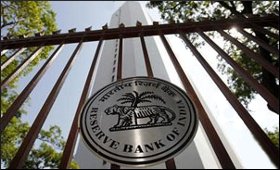
The Reserve Bank of India's directive to Exchange Earner's Foreign Currency (EEFC) account holders to convert 50% of account balances into rupee will severely affect flexibility of payments for imports for some sectors, said exporters' body FIEO on Thursday.
"Flexibility of payments for imports will be severely curtailed particularly for sectors with over 50% import intensity like gems and jewellery, petroleum, electronic goods , plastic products, chemicals, etc.," said FIEO President M. Rafeeque Ahmed Thursday in a press statement.
The RBI Thursday asked EEFC Account holders to convert at least 50 percent of their foreign exchange holdings in rupee, a move seen to prop up the battered currency, which hit a record closing low of 53.83 against the US dollar Wednesday.
The process has to be completed within a fortnight.
EEFC is an account maintained in foreign currency with an authorised dealer dealing in foreign exchange. The facility provided to the foreign exchange earners, including exporters, to credit foreign exchange earnings to the account, so that they do not have to convert foreign exchange into Rupees and vice versa, thereby minimizing the transaction costs.
The RBI said that EEFC scheme is intended to enable exchange earners to save on conversion and transaction costs while undertaking forex transactions in future, and not to enable them to maintain assets in foreign currency, as India is still not fully convertible on Capital Account.
FIEO suggested that for electronics, plastics and chemicals sectors, the cap should be increased to 75% while for petroleum, and gems & Jewellery sectors, the earlier stipulation of retaining 100% in EEFC should be restored.
"Sectors remitting commission or royalty may also feel the pinch as they may have to buy Dollars from market increasing the cost,added Mr Ahmed," the FIEO chief added .
He, however, supported central bank's move requiring exporters to access forex market only after utilising fully the balance in EEFC Account.
"Conversion charges for foreign exchange will also be on the increase impacting fast dwindling export margins. Of late, MSME exporters are complaining that some banks are converting forex at card rate rather than inter-bank rate (market rate) and as a result of the same, a differential of 30 to 40 paisa per dollar is lost due to conversion which works out to a substantial amount in these hard times," Ahmed added.
This circular has come within less than a week of deregulation of foreign currency loans to exporters [PCFC] and exporters are increasingly exposed to the high cost rupee window for export credit which is in the range of 12% and above where as competitors in the market offer interest rates as low as 4-5% clearly wiping out India's edge in the export market, he pointed out.
|
|
|
| |
|
|
|
|
|
|
|
RBI directive on EEFC account
Bansilal Shetkar | Mon May 14 08:54:30 2012
RBI circular talks about restrictions on 'RETENTION" of forex earnings beyond 50%. Does this imply that on the date of receipt of forex, an exporter can make 100% payment - retention is zero percent.

|
|
|
|
|
|
|
| |
| Customs Exchange Rates |
| Currency |
Import |
Export |
US Dollar
|
â¹94.2
|
â¹92.5 |
UK Pound
|
â¹128.85
|
â¹124.8 |
Euro
|
â¹112.2
|
â¹108.45 |
| Japanese
Yen |
â¹59.85 |
â¹58 |
| As on 06 May, 2026 |
|
|
| Daily Poll |
 |
 |
| What is the biggest war impact on MSMEs? |
|
|
|
|
|
| Commented Stories |
|
|
|
|
|
|
| |
|