|

|
'MSME exporters hit by Rupee fluctuation'
|
|
|
|
| Top Stories |
 |
|
|
|
SME Times News Bureau | 08 May, 2012
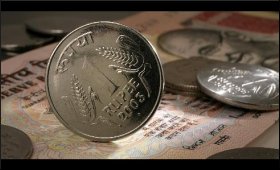
Micro, small and medium scale exporters are being hit by Rupee fluctuation as they have to bear additional costs for hedging their currency in the forward market in order to cover the exposure, according to the Federation of Indian Export Organisations (FIEO).
"In order to cover the exposure of rupee volatility, the MSME export sector hedges their currency in the forward market and the treasury branches of the banks cover the exposure and risk suffered by the MSME export sector at a cost. Typically, an exporter looses an average of 0.20% to 1% of his inward remittances thereby losing their competitive edge to that extent," said FIEO president M Rafeeque Ahmed at an interactive meeting with Forum of Financial Writers held on Monday in New Delhi.
"Typically, an exporter looses an average of 0.20% to 1% of his inward remittances thereby losing their competitive edge to that extent. The rupee, therefore, needs to be kept in a band so as to avoid such fluctuations." he added.
The rupee recently fell to below 53 to a dollar, the lowest in the last 4 months and showed high volatility.
A year ago, for example, rupee was Rs.44.5 to a dollar and had appreciated 13% from the preceding 13 months and Rs.54 to a dollar between August of last year and mid December of last year showing 21% depreciation indicate the range of volatility which is due to speculative portfolio inflows and bound to impact the MSME export sector.
A March 2011 study of the RBI indicated that currency volatility had increased after the introduction of futures trading and the susceptibility/vulnerability of the rupee to foreign speculative investors deciding that both the Indian stock market and the rupee are perhaps not such a good bet resulting in the depreciation of the currency as is happening presently.
Ahmed pointed out that one of the reasons for the loss of confidence is the alarming increase in the current account deficit and the balance of payments position and is largely due to the speculative element of oil in the international market and hoarding of gold domestically.
"While India is importing about $141 billion of oil as against the $185 billion trade deficit, about $58 billion of oil is also being exported and large private refiners have the advantage of selling the same in the international market which is not restricted by the administered price mechanism (APM) being suffered by oil companies who incur losses selling the same in the domestic market," the FIEO chief said.
|
|
|
| |
|
|
|
|
|
|
|
|
|
|
|
|
|
|
| |
| Customs Exchange Rates |
| Currency |
Import |
Export |
US Dollar
|
₹94.2
|
₹92.5 |
UK Pound
|
₹128.85
|
₹124.8 |
Euro
|
₹112.2
|
₹108.45 |
| Japanese
Yen |
₹59.85 |
₹58 |
| As on 06 May, 2026 |
|
|
| Daily Poll |
 |
 |
| What is the biggest war impact on MSMEs? |
|
|
|
|
|
| Commented Stories |
|
|
|
|
|
|
| |
|