SME Times News Bureau | 07 May, 2012
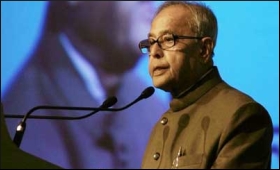
Crisis in the eurozone had negatively impacted the Indian economy, Finance Minister Pranab Mukherjee said in Manila on Saturday.
"The unfolding of the Eurozone crisis has impacted the Indian economy through lower growth, falling business sentiments, declining capital inflows and exchange rate and stock market volatility with attendant implication for investor confidence," he said.
For the rupee depritiation against the US dollar, he said, "In several Asian countries, excepting China, the balance of payment (BoP) is under stress which leads to currency depreciation."
Addressing a press conference after taking over as chairman of the board of governors of the Asian Development Bank (ADB), Mukherjee said the government was taking measures to boost growth and curb fiscal deficit.
"On the fiscal front, we are committed to bring down the subsidy bill below two percent of GDP in 2012-13 and to 1.75 percent of GDP in next three years," he said.
Mukherjee said the loosening of monetary policy by the central bank will help revive private investments and boost business sentiments.
The Reserve Bank of India (RBI), in its annual monetary policy for 2012-13 announced April 17, lowered key policy rates by 0.50 percent. This was the first rate cut by the central bank in three years.
"I hope this will help in investment revival and contribute to strengthening of business sentiments," he said.
The finance minister said India's economic growth is likely to accelerate in the coming years with the government's efforts to revive investments.
"In the union budget for 2012-13, we have focused on strengthening domestic growth drivers, encouraging private investments to regain its pre-2008 crisis growth momentum and addressing supply constraints in infrastructure and agriculture sector," Mukherjee said.
India's economic growth is estimated to fall to 6.9 percent in 2011-12 as compared to 8.4 percent registered in the previous year.
The government has set a target of 7.6 percent growth for the current financial year that began April 1.