|

|
Exports cross $300, but trade deficit shoots up
|
|
|
|
| Top Stories |
 |
|
|
|
SME Times News Bureau | 19 Apr, 2012
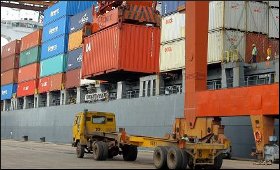
India's merchandise exports have increased 21% year-on-year to $303.7 billion in 2011-12, despite weak demand in traditional export markets such as the US and the European Union, but growing trade deficit has taken away the shine from this target-surpassing performance.
Interacting with the media persons here today, Commerce Secretary Rahul Khullar informed that India’s exports for the last fiscal (April 2011 to March 2012) have registered a growth of 21%, at $303.7 billion.
However, imports grew at a sharper pace of 32.1% during the period, reaching $488.6 billion, and resulting in a trade deficit of184.9 billion.
The government had set a target of $150 billion trade deficit.
During the last fiscal, sectors that have done well with regard to exports include, engineering($58.2 billion, growth rate 16.9%), petroleum & oil products ($57.5 billion; growth rate 38.5%), gems and jewellery ($45.9 billion; growth rate13.3%), drugs and pharmaceuticals ($13.1 billion; growth rate 21.9%), leather ($4.2 billion; growth rate 22.5%), electronics ($9 billion; growth rate 9.2%), cotton yarn and fabric made-up ($7.2 billion; growth rate 17.4% )
Apart from this, exports of ready-made garments yarns and fabrics grew 18% to $13.7 billion, man-made yarns and fabrics 18.5% to $5.1 billion, and marine products 31.4% to $3.4 billion.
Petroleum imports were the main component in the import basket, registering 46.9% growth at $155.6 billion. This was $50 billion higher than the previous fiscal. The other major imports were of gold and silver, which rose 44.4% to $61.5 billion. This was $19 billion more than in 2010-11.
Together, petroleum, and gold and silver accounted for a $69-billion increase in imports over 2010-11 levels.
However, imports of gems and jewellery fell by 0.6% to $31 billion.
Huge increase in imports was also seen in imports of coal, from $9.8 billion in 2010-11 to $17.6 billion in 2011-12, accounting for a $7.8-billion increase (80.3% growth). Fertiliser imports grew from $6.8 billion to $11 billion during the period under review, registering an increase of $4.2 billion (59%), while edible oil imports jumped from $6.5 billion to $9.6 billion, an increase of $3.1 billion (47.5%).
These three sectors accounted for an additional $15 billion in the import bill.
Machinery imports, including capital goods, registered 27.7% growth at $35.4 billion, while electronics goods imports were worth $32.7 billion (23.2%).
Commenting on the import figures, Khullar said that the trade deficit, which is the highest ever, is a serious concern. He cautioned that the issue of huge imports have to be dealt with urgently.
|
|
|
| |
|
|
|
|
|
|
|
|
|
|
|
|
|
|
| |
| Customs Exchange Rates |
| Currency |
Import |
Export |
US Dollar
|
₹94.2
|
₹92.5 |
UK Pound
|
₹128.85
|
₹124.8 |
Euro
|
₹112.2
|
₹108.45 |
| Japanese
Yen |
₹59.85 |
₹58 |
| As on 06 May, 2026 |
|
|
| Daily Poll |
 |
 |
| What is the biggest war impact on MSMEs? |
|
|
|
|
|
| Commented Stories |
|
|
|
|
|
|
| |
|