|

|
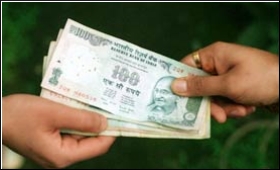
Need to transform India into a less cash-handling society: RBI
|
|
|
|
| Top Stories |
 |
|
|
|
SME Times News Bureau | 04 Aug, 2012
Reserve Bank of India (RBI) Governor D. Subbarao Friday stressed the need for transforming India into a less cash-handling society like other emerging economies through innovation in payment systems.
"We have largely remained a cash society when compared with other emerging markets like Brazil, Mexico and Russia. The value of bank notes and coins in circulation in India is 12 per cent of GDP which is high," Subbarao said while speaking at the Institute for Development and Research in Banking Technology (IDRBT) in Hyderabad.
The number of non-cash transactions per person in India stands at just six per year, which is very low in comparison with other emerging economies, he said.
Subbarao said that while the large value payment systems have mostly shifted to the electronic mode, the penetration of retail payment is quite shallow and it continues to be paper-centric.
He called for expanding the acceptance infrastructure such as ATMs, PoS (point of service) terminals, micro-ATMs and hand-held devices to smaller towns and villages to give an impetus to electronic payments.
Subbarao inaugurated a mobile banking security lab at IDRBT, released the information security framework developed by IDRBT, launched Indian Banks' Technology Consortium and also gave away IDRBT banking technology excellence awards 2012.
According to him, the installation of ATMs across the country is increasing by 25 percent per year but their penetration is quite poor as measured by the number of ATMs per million population.
To increase the deployment of ATMs, the RBI recently allowed non-banking entities to set up "White Label ATMs" (WLA) in smaller centres. The Governor hoped that this policy initiative would set the beginning of penetration.
"We need to probe further to understand what is inhibiting innovation in the Indian payment systems - is it that the regulatory environment is still not conducive enough, or is the market not able to appreciate the future business promise?"
He cited the slow pace of infrastructure building as one of the reasons for retail payment remaining paper-centric. He said India has one of the lowest number of ATMs and PoS terminals - just 63 ATMs and 497 PoS per million population.
"Only a small fraction of the 10 million-plus retailers in India have card payment acceptance infrastructure. Though the usage of mobile banking and internet banking is growing, a significant percentage of customer base is not covered."
Subbarao told the bankers that RBI has come out with vision document on the road map for the evolution of payment and settlement systems in India for the period 2012-15. The document reinforces the commitment of the central bank to ensure that all payment and settlement systems in the country are safe, efficient, interoperable, authorised and accessible, while furthering financial inclusion and compliance with international standards.
In an attempt to protect card-present transactions, the RBI issued directions to banks and other stakeholders to initiate measures to strengthen the security and fraud risk management practices, merchant sourcing, and to issue EMV (Europay-MasterCard-VISA) chip card and PIN to customers who have evidenced at least one purchase using their debit/credit card in a foreign location.
"The RBI has to take a decision very soon on what technology to adopt for additional factor of authentication. There is the choice between migrating to EMV cards with chip-and-pin and an Aadhaar-based biometric authentication.
"The chip-and-pin is an established and tested technology, but is relatively more expensive. The Aadhar-based option is probably going to be cheaper, but the robustness of this technology is as yet unproven. If indeed we are finally able to marry Aadhaar into the cards, we would be achieving the same level of security available in chip-and- pin model at a much lower cost."
|
|
|
| |
|
|
|
|
|
|
|
|
|
|
|
|
|
|
| |
| Customs Exchange Rates |
| Currency |
Import |
Export |
US Dollar
|
₹94.2
|
₹92.5 |
UK Pound
|
₹128.85
|
₹124.8 |
Euro
|
₹112.2
|
₹108.45 |
| Japanese
Yen |
₹59.85 |
₹58 |
| As on 06 May, 2026 |
|
|
| Daily Poll |
 |
 |
| What is the biggest war impact on MSMEs? |
|
|
|
|
|
| Commented Stories |
|
|
|
|
|
|
| |
|