|
|
|

|
Venezuela announces currency devaluation
|
|
|
|
| Top Stories |
 |
|
|
|
IANS/EFE | 11 Jan, 2010
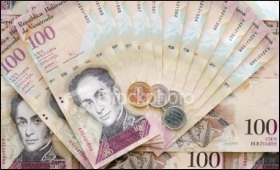
Venezuelan President Hugo Chavez has announced a currency devaluation and the introduction of a two-tiered official exchange rate as his government aims to boost a sagging economy.
The official exchange rate of 2.15 bolivars to the dollar, in effect since 2005, will be replaced beginning Monday with a dual-rate regime.
Importers of essential items such as food, medicine and heavy machinery will be able to buy dollars at a rate of 2.60 bolivars to the greenback.
The school supply and science and technology sectors, as well as public sector imports and remittances, also will be favoured by that rate, which will represent a 17 percent devaluation.
But a higher rate of 4.30 bolivars to the dollar will apply to most of the economy, including the automobile, chemicals, rubber and plastics, appliances, textile, electronics, tobacco, beverages and telecommunications sectors.
"Non-essential imports are going to get more expensive," especially vehicles and shoes, Chavez said in a cabinet meeting Friday that was partially televised by state-run VTV television.
The devaluation comes as the country seeks to dig its way out of a painful recession; the economy contracted 2.9 percent in 2009 and ordinary Venezuelans have been suffering the effects of high inflation.
The socialist president spoke first about a drought-induced national energy crisis before denouncing a new violation of Venezuelan airspace by a US military plane that took off from the Dutch island of Curacao, a claim that US Air Force officials have denied.
Chavez then announced the currency devaluation, saying "what we want with these measures is to stimulate (exports) so Venezuela is a country that exports and stops being exclusively dependent on oil".
State oil company PDVSA's revenues account for roughly 90 percent of the country's export earnings and fund about half the national government's budget, with the company's contributions paying for health clinics for the poor and other social programmes.
Venezuela, one of the world's top 10 oil producers and exporters and a leading supplier of crude to the US, imports much of its food, clothing and other basic goods.
The president also said Friday that Venezuela's Central Bank will "intervene" in the unauthorised parallel currency market, where importers unable to buy sufficient dollars from the government due to currency controls must pay three times the official rate.
|
|
|
| |
|
|
|
|
|
|
|
|
|
|
|
|
|
|
| |
| Customs Exchange Rates |
| Currency |
Import |
Export |
US Dollar
|
₹94.2
|
₹92.5 |
UK Pound
|
₹128.85
|
₹124.8 |
Euro
|
₹112.2
|
₹108.45 |
| Japanese
Yen |
₹59.85 |
₹58 |
| As on 06 May, 2026 |
|
|
| Daily Poll |
 |
 |
| What is the biggest war impact on MSMEs? |
|
|
|
|
|
| Commented Stories |
|
|
|
|
|
|
| |
|